New Patients and Emergency Appointments Are Welcome!

By Sanders Family Dental | September 7, 2026
If you’ve ever winced after a whitening treatment, you’re not alone. Many Lombard patients ask why does teeth whitening cause sensitivity and how to stop it in Lombard before committing to treatment. The good news is that sensitivity after whitening is common, temporary, and very manageable. Understanding the science behind it helps you make smarter choices for your smile.
At Sanders Family Dental Lombard, Dr. David H. Sanders takes a patient-first approach to every cosmetic treatment. That includes making whitening as comfortable as possible. This article explains what causes the discomfort and exactly what you can do about it.
Why Teeth Whitening Causes Sensitivity in the First Place
Whitening agents — typically hydrogen peroxide or carbamide peroxide — work by penetrating the outer enamel layer. They break apart stain molecules deep within the tooth structure. This process is effective, but it temporarily opens microscopic pathways called dentinal tubules.
These tubules connect the outer tooth surface to the sensitive inner pulp. When they’re exposed, fluid movement inside them triggers nerve responses. That’s what creates the sharp or achy feeling during or after treatment.
Enamel thickness also plays a role. Patients with thinner enamel tend to feel more sensitivity. Similarly, pre-existing conditions like gum recession or tiny cracks can make teeth more reactive to whitening agents.
How Dentists in Lombard Minimize Whitening Sensitivity
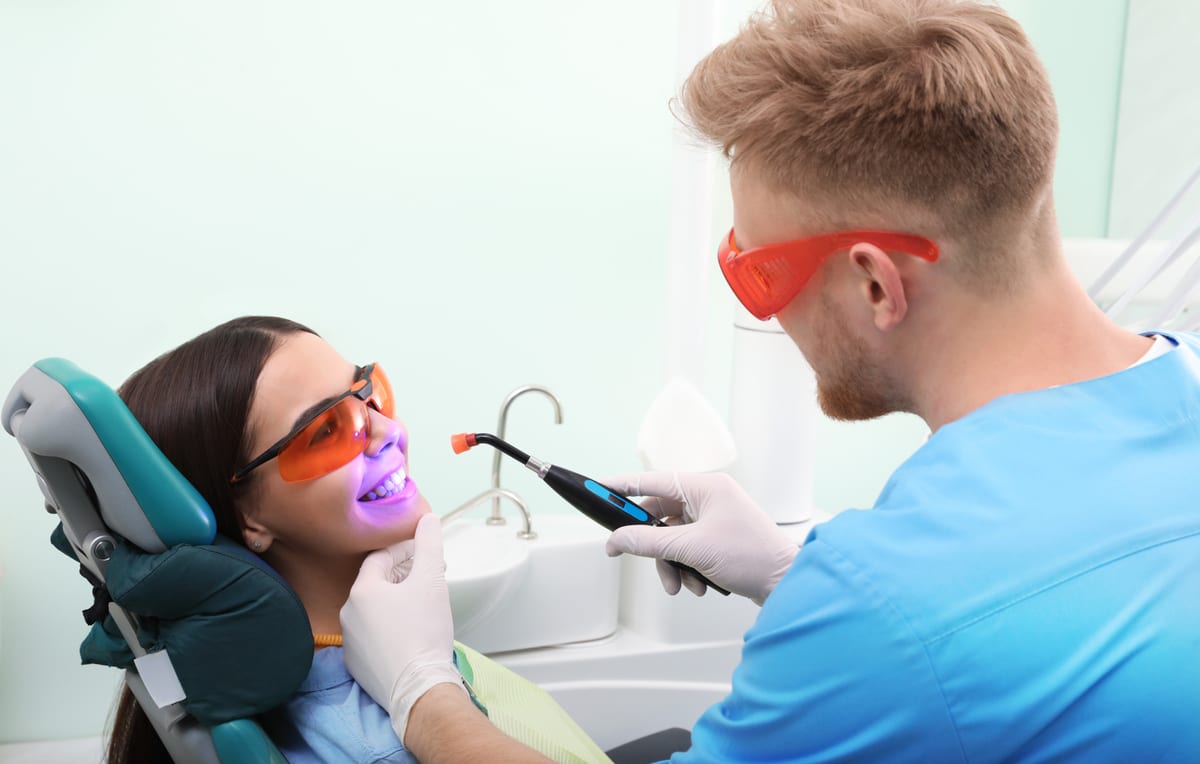
Professional whitening done at Sanders Family Dental Lombard is carefully controlled. Dr. Sanders tailors the peroxide concentration to your specific tooth sensitivity level. This is something over-the-counter kits simply cannot do.
Here are the key ways our team reduces discomfort during treatment:
- Pre-treatment fluoride application — strengthens enamel before whitening begins
- Desensitizing gel — applied before or after the whitening agent to calm nerves
- Custom-fit trays — prevent the gel from contacting gum tissue
- Shorter application times — lower exposure minimizes nerve stimulation
- Potassium nitrate products — used to block nerve signal transmission
For patients with significant dental anxiety or severe sensitivity, Sedation Dentistry Lombard options may also be discussed. Relaxation during treatment can reduce stress-related tooth clenching that worsens sensitivity.
What You Can Do at Home Before and After Whitening
Your habits in the days surrounding treatment make a real difference. Preparation before whitening can significantly reduce how much sensitivity you feel. Recovery after whitening also depends on how well you care for your teeth.
Follow these steps to protect your comfort:
- Switch to a sensitivity toothpaste — use it for at least two weeks before your appointment
- Avoid acidic foods and drinks — citrus, vinegar, and soda weaken enamel temporarily
- Skip very hot or cold foods — for 24 to 48 hours after treatment
- Use a soft-bristled toothbrush — aggressive brushing aggravates sensitive enamel
- Take an OTC pain reliever if needed — ibuprofen can reduce inflammation-related discomfort
Most sensitivity resolves within 24 to 72 hours after a professional whitening session. If discomfort persists beyond three days, contact our Lombard office right away. Prolonged sensitivity can sometimes signal an underlying issue that needs attention.
Is Professional Whitening Safer Than Store-Bought Kits?
Over-the-counter whitening strips and trays are widely available. However, they carry a higher risk of sensitivity compared to professional treatment. The main reason is the lack of customization and professional supervision.
Generic trays often don’t fit properly. Poor fit allows the whitening gel to contact your gums. Gum irritation then adds to the overall discomfort you experience.
Professional whitening through Cosmetic Dentistry Lombard at Sanders Family Dental gives you a safer, more predictable outcome. Dr. Sanders evaluates your teeth before any treatment begins. He identifies risk factors for sensitivity and adjusts the protocol accordingly.
If your enamel is already thin or your gums are recessed, he may recommend alternative cosmetic options. Veneers or dental bonding can brighten your smile without the same sensitivity risk. A professional consultation always leads to a smarter treatment plan.
Who Is Most Likely to Experience Whitening Sensitivity?
Not every patient experiences the same level of sensitivity. Some individuals feel almost nothing, while others are quite uncomfortable. Knowing your risk level helps set realistic expectations before treatment.
You may be more prone to whitening sensitivity if you:
- Already have sensitive teeth day-to-day
- Have thin or worn enamel
- Show signs of gum recession
- Have untreated cavities or cracked teeth
- Grind your teeth regularly
Dr. Sanders performs a thorough exam before every whitening procedure. This ensures that any existing dental issues are addressed first. Whitening on unhealthy teeth significantly raises both sensitivity risk and the chance of poor results.
Patients with active decay or gum disease will need those conditions treated before whitening can begin. This is another reason professional oversight matters so much in cosmetic dental care.
Conclusion: Whiter Teeth Don’t Have to Mean Painful Teeth
Teeth whitening sensitivity is real, but it doesn’t have to stop you from achieving a brighter smile. When treatment is supervised by an experienced dentist, discomfort is minimized and short-lived. Dr. David H. Sanders and the team at Sanders Family Dental Lombard are committed to making your whitening experience safe and comfortable.
Whether you’re brand new to whitening or have struggled with sensitivity in the past, we have solutions that work for your specific situation. You deserve a smile you’re proud of — without unnecessary discomfort along the way. Book Now to schedule your appointment with our team.
Frequently Asked Questions
How long does teeth whitening sensitivity last?
Most patients experience sensitivity for 24 to 72 hours after a whitening treatment. It typically peaks within the first few hours and gradually fades. If discomfort continues beyond three days, contact your dentist to rule out any underlying issues.
Can I whiten my teeth if I already have sensitive teeth?
Yes, but it requires extra care and professional guidance. Dr. Sanders evaluates your sensitivity level before treatment and may use lower-concentration whitening agents. Desensitizing products applied before and after treatment also help make the process more comfortable.
Does professional whitening cause more sensitivity than store-bought kits?
Actually, the opposite is often true. Professional whitening uses custom-fit trays and carefully selected peroxide concentrations. This reduces gum contact and overexposure, which are the main causes of sensitivity with generic kits.
What toothpaste should I use after teeth whitening?
Use a toothpaste specifically formulated for sensitive teeth. Look for active ingredients like potassium nitrate or stannous fluoride. These ingredients block the dentinal tubules that cause nerve-related sensitivity after whitening treatment.
Are there alternatives to whitening if my teeth are too sensitive?
Yes. Patients with significant sensitivity may benefit from cosmetic alternatives like veneers or dental bonding. These options can dramatically improve tooth color without the chemical exposure that triggers sensitivity. Dr. Sanders will help you find the best solution during your consultation.